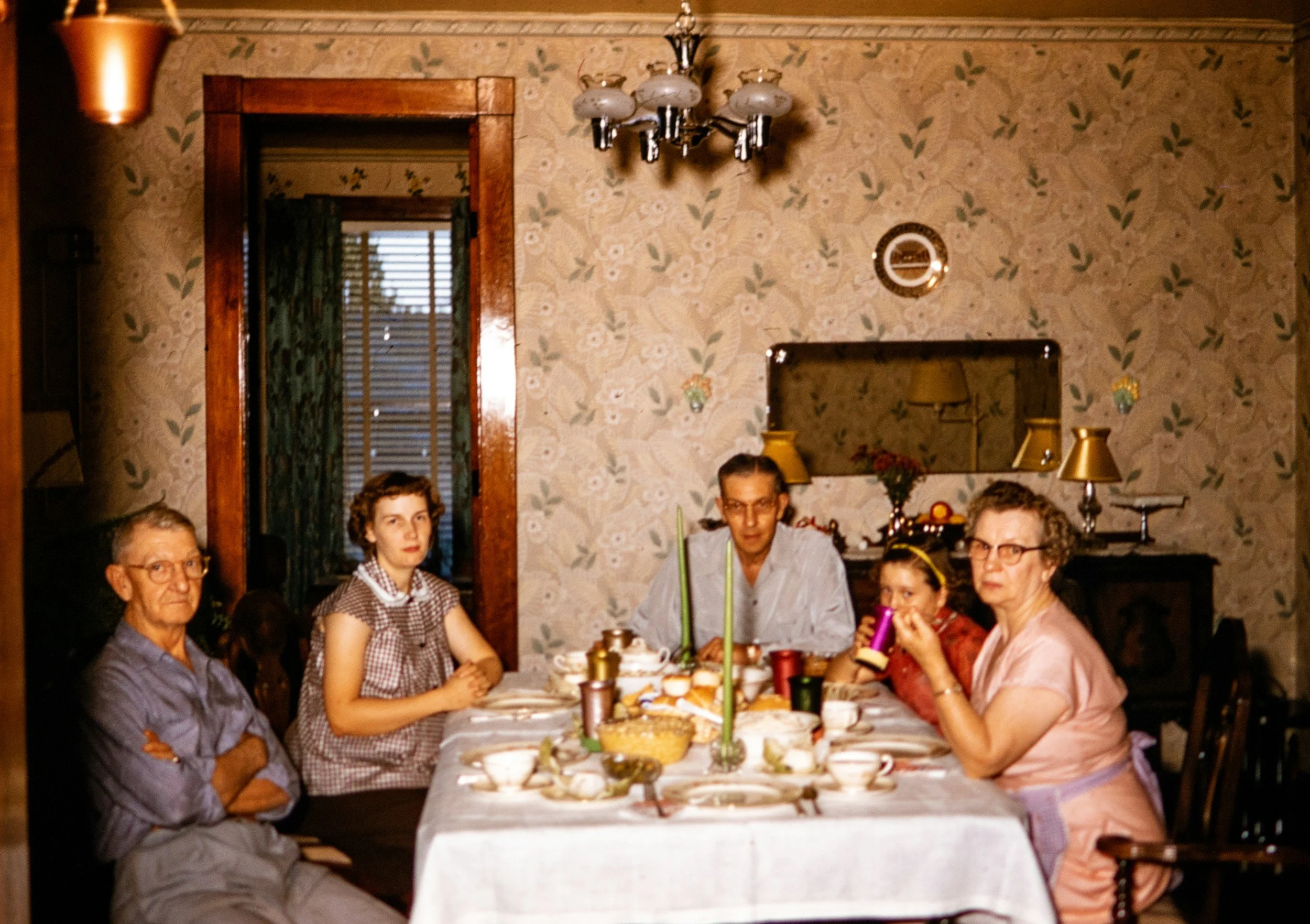
Thanksgiving is just around the corner. Some of us may be excited to spend time with our families and eat yummy food. Some may be feeling more ambivalent, or even dreading, the family interactions that lay before us. What should be a simple family gathering can feel like an emotional minefield. The uncle that won’t stop bringing up politics. The mom who makes comments about your appearance. The brother that used to bully you. The pressure to perform happiness and togetherness can trigger old wounds and leave you wondering why you even do this year after year.
You might notice a part that wants to please everyone and keep the peace, even at your own expense. Another part might be angry and want to confront family members about past hurts. Another part might want to shut down and numb out during the gathering. These parts often developed in childhood as creative adaptations to challenging family dynamics, and they're trying to protect you, even when their strategies no longer serve your adult self.
If you find yourself dreading family gatherings, there are practical, evidence-based strategies that can help you not just survive, but actually maintain your sanity during the holiday season.
Before your Holiday Gathering
Check in with yourself. Before your family gathering, take 20-30 minutes for an internal inventory. Find a quiet space, close your eyes, and ask yourself: "What parts of me are activated about this upcoming event?" You might notice anxiety, dread, hope, or a mix of emotions. Rather than judging these feelings, get curious about them. Then ask yourself: "How would the Healthy Adult version of me show up at this event?” From this centered place, you can make conscious choices about how you want to show up at the gathering, rather than being driven by protective parts that developed when you were much younger and more vulnerable.
Go easy on yourself in the days leading up to the gathering. Are there ways to make your life softer and less stressful for you in the days leading up to the event? Maybe you opt to bring something store-bought instead of homemade. Maybe you keep your calendar light so you have plenty of time to rest. Maybe you amp up some self-care activities, whether that means a bubble bath or getting in a good sweat session at the gym. Being gentle with yourself in the days prior can add some cushion to your nervous system so it’s not as easy to be triggered.
Identify your early warning signs of dysregulation. Maybe your jaw clenches, your thoughts race, or you feel heat rising in your chest. Maybe it’s a familiar emotion or thought pattern that pops into your brain. The earlier you catch dysregulation, the easier it is to regulate before you become completely overwhelmed.
Go in with a plan. The plan could include strategies to stay regulated, what boundaries you need to have in place, and what to do if things get out of hand. Discuss this plan with anyone who might be joining you at the event. You might not even need to enact the plan, but if you do, you’ll be glad you thought about it ahead of time rather than grasping for solutions in the heat of the moment.

During Your Holiday Gathering
Plan for breaks. This is not about escaping the gathering but giving yourself a little boost to get through with more peace, calmness, and sanity. Examples include:
Stepping outside for some fresh air
Spending five minutes in the bathroom doing breathing exercises
Sitting in your car for a few minutes before entering and after leaving
Volunteering to run an errand to the store for forgotten items
Pause to do quick body check-ins. Throughout the holiday gathering, pause periodically to do a quick body scan. This can even be done while sitting at the dinner table. Starting at the crown of your head, mentally scan down through your body: forehead, jaw, neck, shoulders, chest, belly, arms, hands, hips, legs, and feet. Notice where you're holding tension or unusual sensation. Here’s what you can do once you’ve identified areas of tension:
Bring gentle attention to these places. You might imagine breathing into your tight shoulders or gently rolling your neck. Sometimes, simply bringing awareness to tension allows it to release naturally.
Practice orienting, a somatic technique where you slowly look around the room, noticing colors, shapes, and objects. This helps your nervous system distinguish between past and present, reminding your body that you're here now, as an adult with resources, not the powerless child you once were.
Put both feet on the ground. Imagine the floor and the earth beneath your feet rising up to hold and support you. Maybe put some weight into your feet or pedal your feet to remind your nervous system that you are not stuck in place.
Locate another sensation in your body that feels more neutral to positive, then practice switching your attention between the neutral to positive sensation and the more difficult sensation. This is called pendulation and, like the pendulum of a clock, the methodical switching back and forth of our attention allows our mind to become aware of more than one sensation at a time. This helps reduce the tunnel vision that can cause us to become overwhelmed when our nervous systems get activated.
Honor your small needs. Throughout the gathering, check in with your body about small decisions: "Do I want another helping of food?" "Does my body want to sit or stand right now?" "Do I want to join this conversation or stay quiet?" These tiny moments of honoring your body's preferences build your capacity to trust yourself and stay in relationship with your internal experience. This gradually builds your window of tolerance aka your capacity to stay present with discomfort without becoming overwhelmed.
Know your boundaries! Knowing your boundaries doesn’t necessarily mean you have to explain them to anyone else. Rather they are agreements with yourself about what you will and will not tolerate. They could include:
Limiting the duration of your visit (arriving late and/or leaving early)
Staying at a hotel rather than in your family's home
Declaring certain topics off-limits for discussion. If your cousin is going on and on about his latest conspiracy theory, you don’t have to engage directly but you could say, “Hmmm that’s interesting. Please pass the potatoes.” or excuse yourself to go to the bathroom.
Taking breaks when you need them, without explaining or apologizing
Choosing not to drink alcohol so you can stay more present and regulated
Having a code word with your partner or a friend that signals you need support or an exit strategy
If you find yourself thinking, “But Kat, I can’t <insert boundary here, like arrive late or stay at a hotel>. My <insert relative here, like sister, grandpa, family dog> will be furious with me.” Here’s where you have to decide what you can and can’t deal with. Only you can know which part of your peace you want to protect the most, whether that’s honoring your needs, keeping the peace, or somewhere in between. Can you use some of the strategies discussed here to help you better tolerate the feelings your relatives may throw at you?
After Your Holiday Gathering
What you do after the holiday gathering is just as important as how you navigate it. Many people feel exhausted, depleted, or emotionally raw after time with a dysfunctional family. Give yourself time to process the experience. This might mean:
Taking the next day off work if possible, or at least keeping your schedule light
Engaging in somatic practices that help you discharge any residual stress (shaking, dancing, going for a run, or any movement that feels good)
Journaling about which parts showed up and what they were protecting
Talking about your experience with your therapist or a trusted loved one
Doing activities that help you feel connected to your authentic self and current life
Resist the urge to judge yourself for how you showed up or what you did or didn't say. There's no perfect way to navigate family dysfunction. If you managed to stay more grounded than last year, that's progress. If you were triggered and reactive, take that as information about parts of you that need more attention and care.
Permission to Make a Different Choice
It may sound obvious but no one should be forced to spend time with people who have been, or are currently being, abusive to them or anyone else they care about. If being around certain people is too painful or emotionally unsafe for you in this season of life, you’re allowed to do something else or be somewhere else for the holidays. Consider this your permission slip.

The Long Game: Healing Beyond Just Surviving
While this guide focuses on surviving the holidays, the long-term work is to heal the deeper wounds that make family gatherings so difficult. As you build your capacity to stay present with difficult emotions, recognize your protective parts, and befriend your nervous system, you may find that family gatherings become less triggering. Not because your family has changed (though sometimes they do), but because you've developed internal resources that allow you to stay anchored in yourself regardless of external dynamics.
Remember: you survived your childhood in this family system, which means you have tremendous strength and resilience. Now, as an adult, you have the opportunity to do more than survive; you can learn to honor your needs, trust your body's wisdom, and navigate family dynamics with greater ease and authenticity.
This holiday season, be gentle with yourself. Notice the parts of yourself with curiosity rather than judgment. Listen to your body's signals. Return to regulation again and again. And remember that healing is not linear. Sometimes the path brings us back through familiar territory, but each time with more awareness, more resources, and more Healthy Adult Self-energy to guide us through.
You've got this, and you don't have to do it alone. I help people work through the wounds that their childhoods left behind. Schedule your free 20-minute consultation with me to see how I can help you: https://truewindtherapy.com/