Sun's Out, Nervous System's Fried: Restlessness in the Summertime
You wake up on a perfect summer morning in August. Another day of warmth and sunshine is ahead of you. A friend texts you to go to the lake. And instead of feeling a full-body “yes”, you find yourself staring at your couch with longing, wishing for a rainy day so you have an excuse to stay inside without feeling guilty.
You're not depressed. You don't hate summer. You just feel like you haven’t really stopped moving in months and you’re exhausted.
Welcome to the paradox to summer. You’re not alone in feeling off.
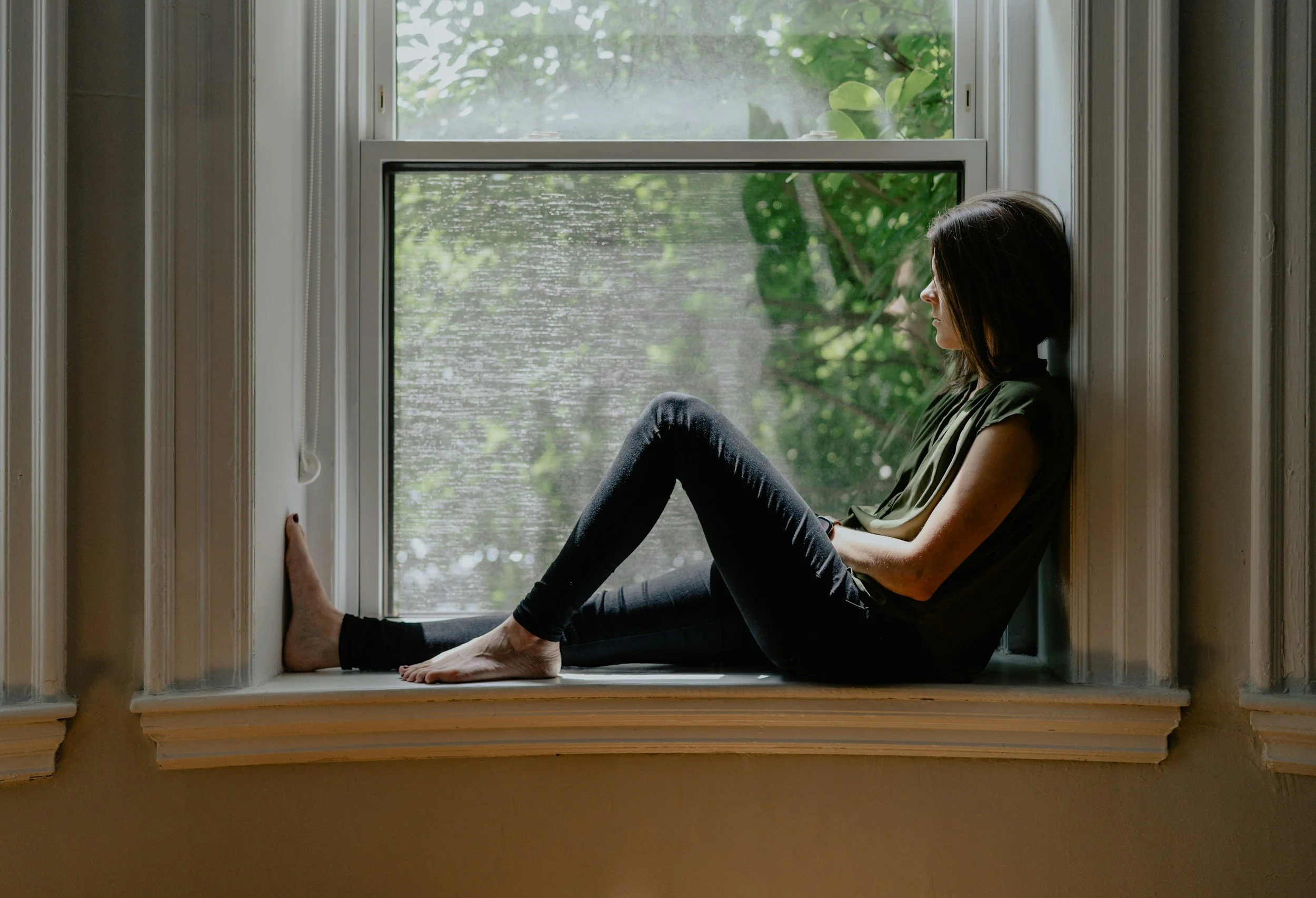
Stuck between wanting to stay inside and feeling like you “should” be outside enjoying summer?
The Scarcity Problem
Summer is a season of abundance: abundant sunshine and warm weather, abundant fruits and vegetables, abundant events and social opportunities.
Yet here in Michigan and other Northern states, we are acutely aware that summer comes with a countdown clock. The memory of our long, cold winters is always looming overhead. We know there are only so many summer weekends, only so many days of being outside without a jacket, only so many nights when the sun sets after 9 p.m.
Instead of creating more presence and appreciation, that awareness begins to create a scarcity mindset, a quiet panic. We feel this as pressure, as obligation, as FOMO. The things you looked forward to all winter start to feel like a checklist which your nervous systems’ experience as stress.
The "Should” Tax
Summer also comes loaded with cultural messaging. It's the season of freedom, of beauty, of effortless connection. Your Instagram is full of golden-hour lake photos and bonfires and people who appear to be living their best life without trying.
When you're feeling overwhelmed or flat inside all of that, there's a specific kind of shame that shows up. A quiet voice that says: what is wrong with me? Everyone else seems to be doing summer correctly. You're doing it wrong somehow.
This is the “should” tax, and it's exhausting. I should be doing more. I should be taking advantage of summer while I have the chance. I should be enjoying myself as much as other people are. You end up spending energy not just on the summer activities themselves, but on managing the guilt about how you're experiencing them. It's a lot.
It's Not Just You. It's Where You Live.
Here's something worth naming before we go any further: the push-pull of summer isn't a personal failing. It's not a sign that you're doing it wrong or that something is broken in you. It's what happens when you try to experience summer with a deeply American nervous system.
Consider the contrast. In France and Italy, August is treated as a near-sacred pause. Businesses close. Cities empty out. Entire industries collectively agree, without apparent guilt, that this month is for living in rather than producing in. Scandinavian countries have long cultural traditions around summer rest that aren't framed as indulgence or reward but simply as a normal and necessary part of being human. Europeans, broadly speaking, tend to take longer and more continuous stretches of vacation rather than the American pattern of long weekends, half-days, and what we've somehow normalized calling a "working vacation."
There's also something different about how leisure itself is held. Sitting in a cafe for two hours over a single coffee isn't considered wasteful in Paris. Spending an entire afternoon at the beach without an agenda isn't something that requires justification in Barcelona. Rest, in much of Europe, isn't what you earn after you finish everything else. It's just part of life.
In the United States, we've inherited something different. A cultural story that ties worth to productivity, that treats stillness as laziness unless it's rebranded as "recharging to perform better," that makes even our vacations feel like something we need to optimize and document and make the most of. We don't just go to the beach. We go to the beach and think about everything we should also be doing, and take photos to prove we were there, and feel vaguely guilty on Sunday evening that we didn't do more.
This is the water we swim in. And it means that summer, rather than arriving as an exhale, often arrives as a new set of demands dressed up in sunshine.
Knowing that doesn't fix it. But it does mean you can stop blaming yourself for it.
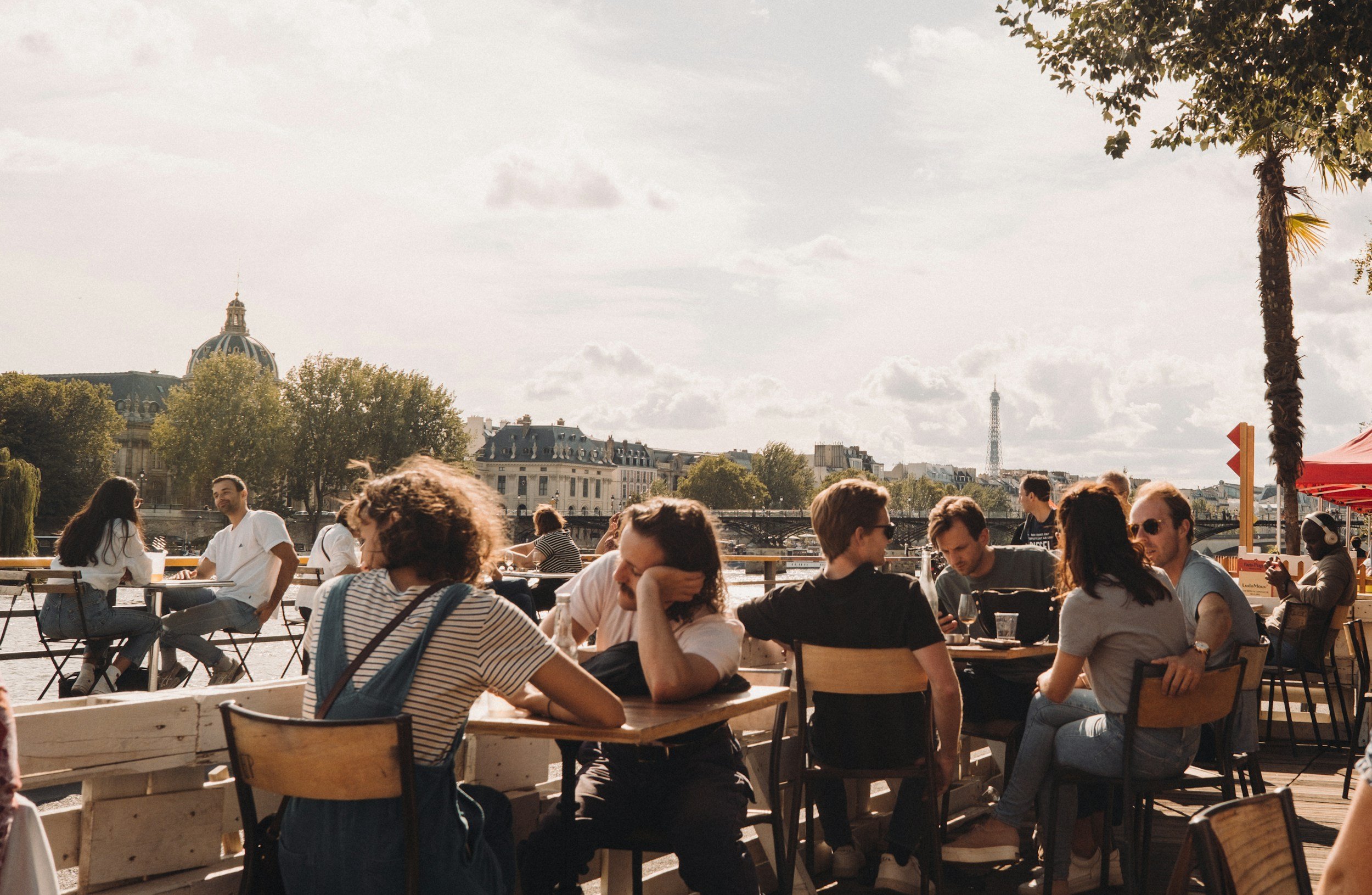
A relaxing, unhurried European summer…
What This Actually Does to Your Nervous System
Here's what's happening underneath all of it: your nervous system is doing a lot of work right now, and nobody is giving it any credit.
More daylight means disrupted sleep. Melatonin production gets suppressed when it stays light late, and a lot of us are running on less rest than we realize.
Heat is a physiological stressor; your body is constantly working to regulate its temperature, which uses up bandwidth.
Looser routines in summer, whether it’s because our kids are home from school or we have busier social calendars, can really throw us off balance.
More sensory input in the form of being around more people, loud events and concerts, sticky sunscreen and bug spray, even bugs buzzing about when we’re outside, can overload our brains.
All of that is input your nervous system has to process.
What often results is a kind of low-grade sympathetic activation. Not full-on fight-or-flight, but that wired-and-tired middle zone where you can't quite relax but you're not exactly energized either. The reaching for more, the doom-scrolling for the next fun thing while you're already at the fun thing, that's actually a dysregulation response. Your system is looking for something that finally feels like enough.
Signs Your Body Is Trying to Tell You Something
Snapping at a loved one on the way to that fun thing you thought you were looking forward to
Scrolling on your phone during times you “should” be present and enjoying yourself
The weird feeling of deflation after a supposedly perfect day that should have felt better than it did
Difficulty relaxing and falling asleep, even if you had a busy, active day
Feeling relieved when plans get cancelled or the weather is crappy, then feeling guilty for feeling relieved
A general sense that summer is slipping away and you're not doing it right, without being able to name what "doing it right" would even look like
Your body isn't being dramatic. It's communicating. The signal is: I need something different than what we're doing.
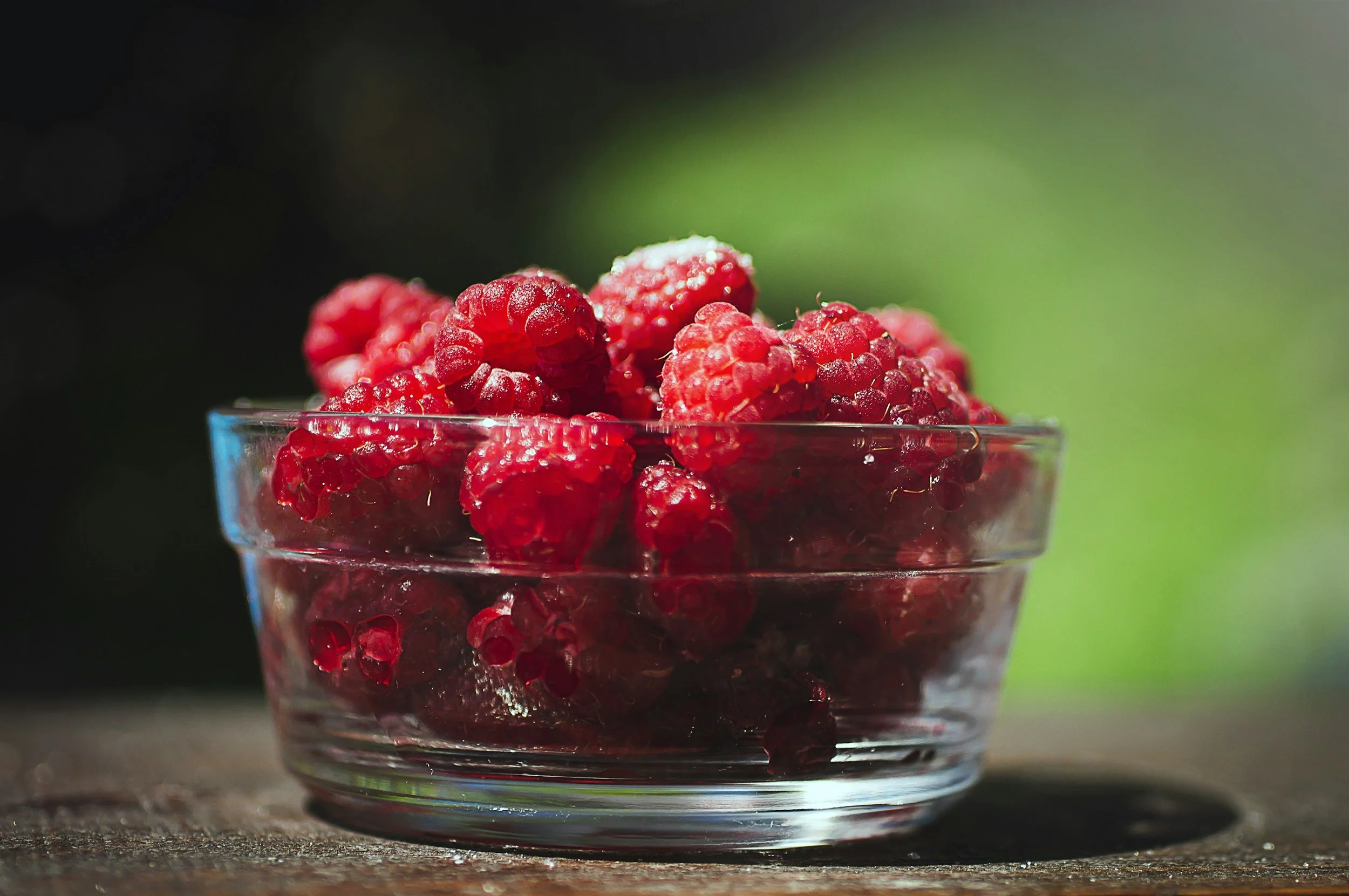
Mmmm, don’t you just want to savor every one of these raspberries at the peak of their summer ripeness?!
Consuming Summer vs. Savoring Summer
Have you ever taken a bite of something particularly delicious and simultaneously wanted to eat it all as quickly as possible but also wanted to eat it slowly so it could last forever?
This is the difference between consuming and savoring.
Consuming summer looks like optimizing your weekends, fitting in as much as possible, documenting the moments, moving quickly from one good thing to the next so you don't waste any of it. It feels productive. It looks great from the outside. And it leaves you somehow more depleted than when you started.
Savoring summer looks like actually feeling the warmth on your skin. Slowly eating that perfectly ripe, juicy peach. Noticing the specific way the light hits the water. Being so present in the one thing that there's no room to be anxious about the five things you're not doing.
The consuming version is a mind experience. The savoring version is a body experience. And most of us have been trained, by productivity culture, by social media, by genuine love of this short season, to live primarily in our heads. Here's the somatic truth: you cannot actually enjoy something you're not present for. No matter how many times you do the thing.
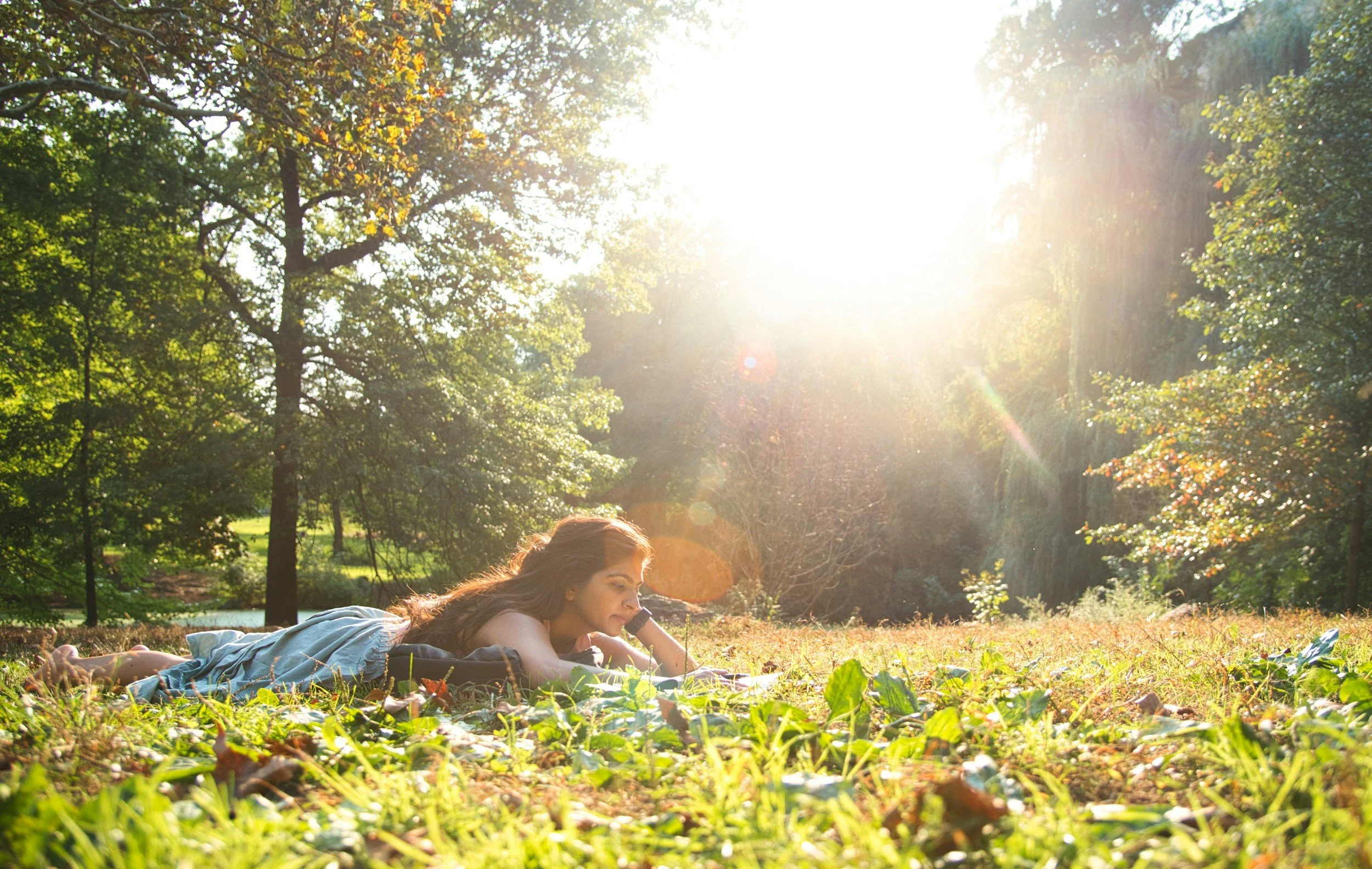
There’s still time to exhale and slow down this summer.
What It Could Look Like to Do Summer Differently
Consider the following to be invitations.
Choose one thing fully instead of three things halfway. One really good, slow afternoon at the beach beats three rushed beach trips where you were already thinking about leaving.
Ask your body what it actually wants today, not what the plan says. This sounds simple and is surprisingly hard. Try it before you look at your calendar. The answer might surprise you.
Let a slow evening be enough. Sitting on your porch watching it get dark is a summer experience. It counts. It might be the one that actually fills you up.
Show up to plans as your authentic self. Sometimes the middle ground is still showing up but being honest about your capacity. Like, “Hey, I’m still coming to your cookout but didn't have the energy to make a side dish so I brought something store-bought instead.”
Allow yourself to have an “inside” day. If you’ve been dying for an excuse to binge watch a show or take a nap on the couch, here it is. This, too, is a way to savor summer free time.
Build in unscheduled time and protect it.“Sorry, I can’t go out. I’m planning on sitting in a hammock in my backyard and watching the bees do their thing.”
Create structure and routine, if you’re craving it. For some of us, structure and routine actually ushers in more freedom and flexibility. It doesn’t have to wait until fall.
Give yourself permission to say "I've had enough for today" while it's still light out. That's not failure. That's your nervous system asking for what it needs. Listening to it is the most embodied thing you can do.
And If You Feel Like You Already Missed It
Maybe you're reading this thinking about how the summer you had in your head back in May looks pretty different from the summer you actually lived. The trips that didn't happen, the slow mornings that got swallowed by to-do lists, the long stretch of July that somehow passed while you were just trying to keep up.
If that's you: I see you. And I want to gently offer this.
Summer isn’t over yet. We’ve been trained to think the end of summer is when the school year starts again but summer weather lasts well into September. Winter is not coming for you tomorrow. Late summer in Michigan is still genuinely beautiful. The lakes are still swimmable into early fall. The light gets softer and more golden; it doesn’t disappear yet. The crowds thin out in the busier places.
You haven't missed the season. You've just arrived at a different part of it, one that's arguably easier on a tired nervous system. Cooler mornings. Quieter beaches. The particular sweetness of something you know is winding down.
One good afternoon outside can still happen. One slow weekend. One evening where you actually put the phone down and let yourself be in it. It may not be the summer you planned but it’s still worthy of your presence and attention. Plus, it’s good practice for next summer!
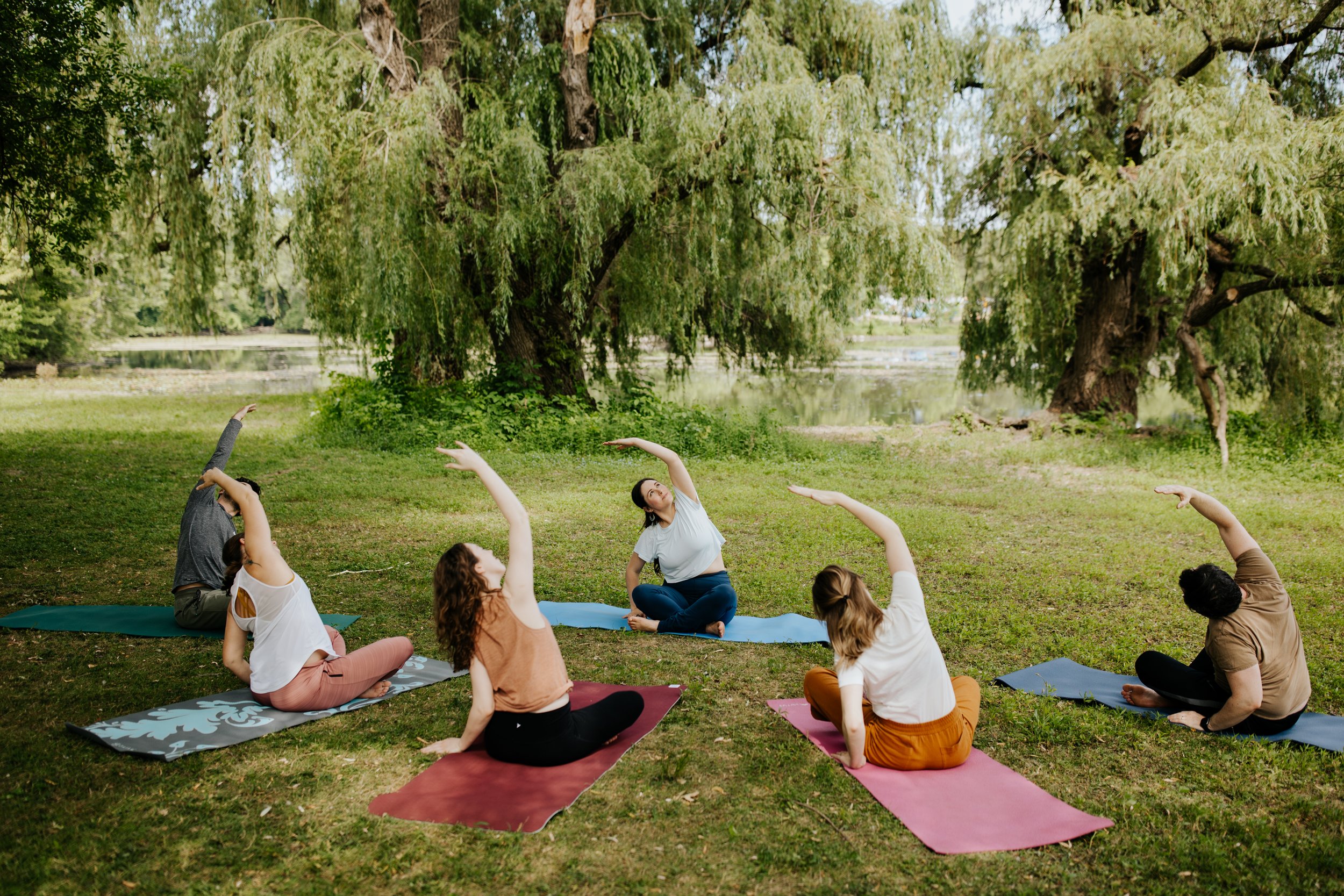
Outdoor yoga and a peek at what Root & Release will be.
Speaking of Slowing Down...
If this resonated and you've been quietly waiting for a permission slip to really exhale, I want to tell you about something happening this fall.
On Saturday, October 3rd, my colleague Shannon Pineau and I are hosting Root & Release: A One-Day Somatic Healing Retreat in Nature at the Botanic Garden at Historic Barns Park in Traverse City, Michigan. It's a full, unhurried day of gentle yoga, nature-based activities, somatic practices, a nourishing lunch, and a lot of intentional slowness. No agenda except to help you come back to yourself in between the busy summer season and the hectic holiday season.
Learn more and grab your spot here. Spots are limited and registration closes ahead of the event, so October 3rd will come faster than you think.